

Her state funeral – a century later

During his last visit to Emily Hobhouse, her brother Leonard comforted his sister:
“You were always brave.”
“Yes, too brave,” she replied with typical self-mockery.
On 8 June 1926, at age 66, Emily Hobhouse died in a flat at Bedford Gardens House in Kensington, London. On her death certificate, the doctor noted pleuritis, heart failure and an unspecified form of cancer. They held a service for her at St. Mary Abbots Church.
It was her wish to be cremated. Emily had stipulated that a nephew, Oliver Hobhouse, and a niece, Dorothea Thornton, could decide together on what should happen to her ashes, but had added that Dorothea knew “I owe a debt to South Africa”.
There was no debate regarding the final resting place of her remains.
A large Emily Hobhouse Reburial Committee was immediately established in Bloemfontein. The funeral which took place on 27 October 1926 in Bloemfontein.
More than 20,000 mourners lined the streets to watch the funeral procession from the Tweetoringkerk to the National Women's Monument.
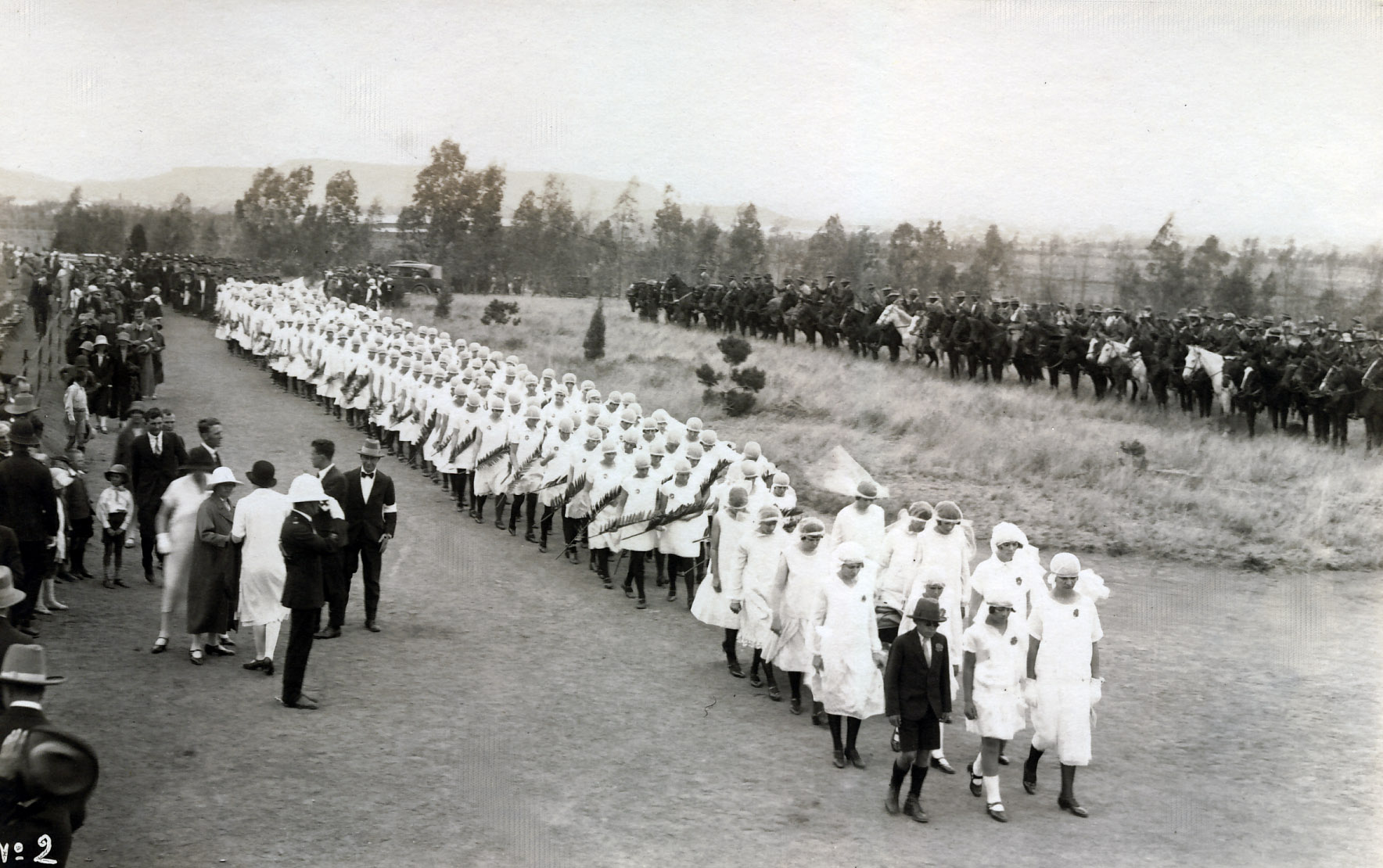
Children named after Emily, along with an Emile, lead the procession. The 200 girls—100 from Eunice High School and 100 from Oranje Girls' School—follow behind the litter. The two schools will participate again, just as they did in 1926.
At 11:00, the programme started at the Monument, and Emily’s ashes were placed into a niche at the foot of the monument.
The first state funeral for a woman, and the only one for a foreigner in South Africa.
Emily100
On October 31, 2026 we will re-enact this state funeral – as close as possible as it was like 100 years ago.
On this day we celebrate the remarkable life of Emily - pacifist, feminist and humanist. We, the Emily100 team, with our curator and lead researcher, Elsabé Brits as the project leader, will try to recreate the ceremony as faithfully as possible. As it was in 1926.
A total of 650 people will take part – in the clothes of the time. As in 1926, 200 girls from the Eunice and Oranje schools will lead the procession, and a school choir will sing songs of the time. The Free State Youth Wind Ensemble, led by Dingaan Chabalala, will lead the march. At the monument, they will play Handel's Largo.
A horse commando also follows. We are going to try to recreate everything: The pastor, verses from Dutch psalms, a release of doves, delegates in antique cars, a mounted commando and a funeral salute.
“Jan Smuts”, the statesman will deliver his tribute. Three paragraphs: “The first impression is one of the power and profound influence of women in the affairs of the world. The life of Emily Hobhouse is a striking instance of this power. Here was a great war, in which hundreds of thousands of men were engaged, in which the greatest Empire on earth was exerting all its strength and force. And an unknown woman appears from nowhere and presses the right button, and the course of our own history in South Africa is permanently altered.”
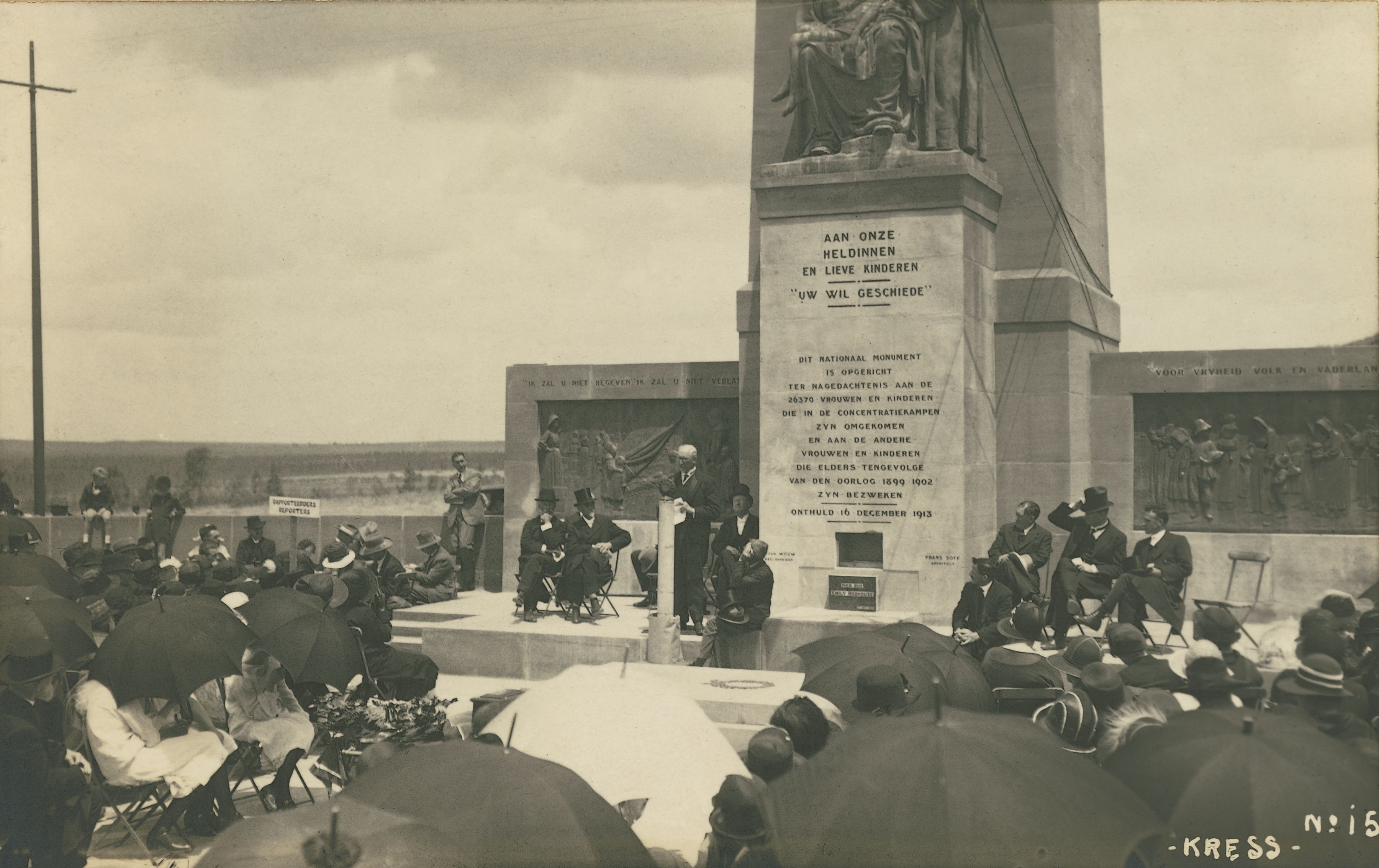
Genl Jan Smuts delivering his speech in 1926.
“For the future of South Africa, the whole meaning and significance of the Anglo-Boer War was permanently affected by this Englishwoman. And she becomes the great symbol of reconciliation between the closely kin people who should have never been enemies.
How often in the great happenings of history a woman appears at the decisive moment, and in her weakness turns the flowing tide of events. It is the inner spiritual force in the world which comes to the surface in pain and anguish and sorrow. And once it appears, everything shrinks into insignificance before it. In the end, the spiritual values of life are supreme”
We will share what is happening with you on these platforms before the time and while the event is taking place:
Follow the campaign on these platforms
Why does Emily matter? She was a whistleblower. At great personal cost, she exposed the appalling conditions in the concentration camps run by men. Alone, she challenged a powerful Empire to face its abuses, in the midst of a war when patriotic sentiment was running high. During an era when women had no voice, she demanded that injustice be recognised and redressed.